What you actually get from each
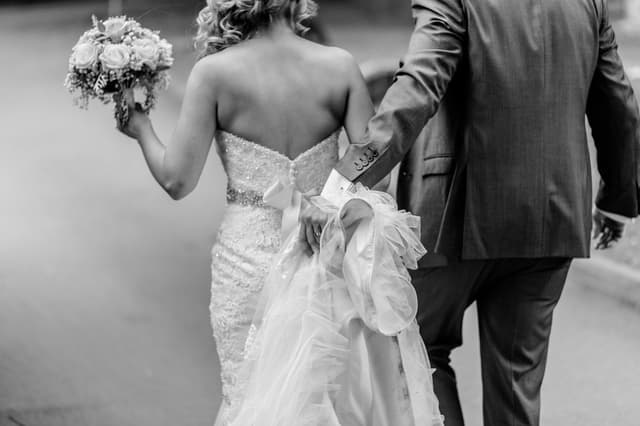
Photography distils a day into moments: the glance during the vows, the grandmother laughing at the table, the portrait you will hang in the hallway. You receive a gallery of edited images that are easy to print, put in an album and send to family. Photos are quick to look at and timeless in a frame.
Video adds what photos cannot hold: your voices, the music as you walk in, the speech that made everyone cry, the way the room moved on the dance floor. A film is something you sit down to watch, often on an anniversary, and many couples say it is the thing they treasure more as years pass, because it brings back how the day sounded and felt.
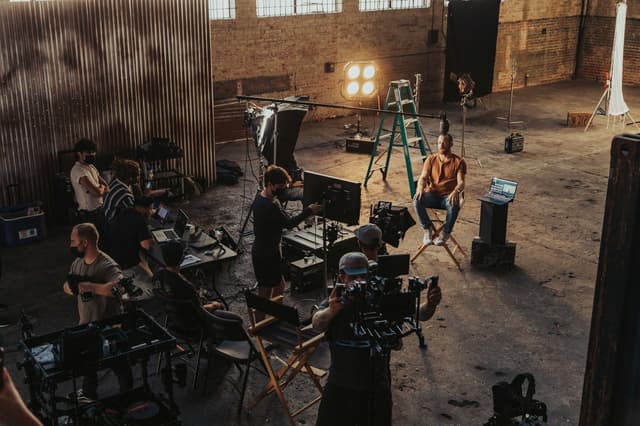
The two also differ in how present they are. A photographer can work quietly with one camera and step in for a portrait; a videographer often uses a stabiliser, a second static camera during the ceremony and microphones. Neither should dominate the day, but it helps to know that video involves slightly more equipment.
Highlight film or documentary edit?
Videographers usually offer some combination of two formats. A highlight film is a short, cinematic edit set to music, built around the emotional peaks of the day. It is made for sharing and rewatching.
A documentary or full edit keeps longer passages intact: the complete ceremony, every speech, the first dance from start to finish. It is less polished but more complete — a record for you and for relatives who could not be there.
Many couples choose a highlight film for sharing and ask for the ceremony and speeches as longer, lightly edited clips. That combination keeps the emotion of a cinematic edit without losing any of the words.
- Highlight film: short, music-led, emotional, easy to share
- Documentary edit: longer, chronological, full vows and speeches
- Social teaser: a very short clip delivered quickly for sharing
- Raw ceremony or speech footage: useful as an archive, unedited
Why audio makes or breaks a wedding film
Good sound is the part of video people underestimate. A beautiful shot with wind noise over the vows is frustrating to watch. Experienced wedding videographers place small microphones on the couple or the celebrant, take a feed from the venue’s sound system for speeches, and record backup audio separately.
If you book video mainly to hear your vows again, ask specifically how audio is recorded in the ceremony room, and whether the registry office or church allows microphones. In historic rooms in Vienna or Salzburg, acoustics are lovely to the ear but challenging for recording, which is exactly where preparation pays off.
How photographer and videographer work together on the day
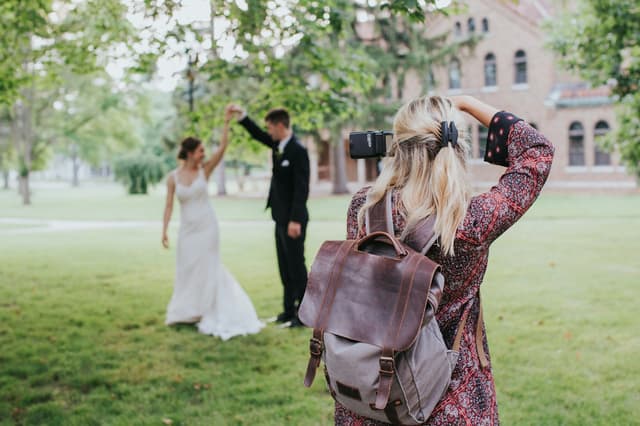
Both need the same moments — the entrance, the rings, the kiss — from good angles, which means two people are moving around the same space. A team that has worked together before knows who takes which position, keeps out of each other’s frame and shares portrait time without stretching it.
If you book them separately, introduce them before the wedding and share one schedule with both. A short call to agree on positions during the ceremony and the order of couple portraits avoids friction later. Portraits usually take a little longer with video, because the filmmaker needs movement rather than a single pose.
Drone shots: when they add something
Aerial footage shows what the ground cannot: a lakeside venue framed by mountains, guests streaming out of a chapel, the scale of a castle courtyard. Used sparingly, a few drone shots give a film a sense of place.
Drone flights in Austria are regulated, and operators must meet requirements set by Austro Control. Many cities, historic centres and protected areas restrict flying, and venues may have their own rules. Ask your filmmaker whether drone footage is realistic at your locations rather than assuming it is.
When one is enough
Not every celebration needs two people with cameras. A short civil ceremony with a handful of guests is often beautifully covered by a photographer alone, especially if a guest records the vows on a phone as a keepsake. Conversely, couples who care most about the speeches and the party sometimes choose a videographer and ask them to export a few stills.
Ask yourself which you will reach for in ten years: an album on the coffee table or a film on a quiet evening. If the answer is clearly one of them, that is your priority. If you hesitate, it is usually a sign that both would mean something to you.
For events and companies: photo, video or both?
The same logic applies to corporate events, conferences and launches. Photos serve press releases, websites, internal newsletters and speaker profiles. Video works for aftermovies, social clips and recordings of keynotes that people could not attend.
If the event happens once and matters for marketing, both are often worth it — and the photographer and filmmaker can share a briefing, run of show and shot list. For internal meetings, a photographer alone frequently covers what is needed.
- Photo only: press images, headshots, documentation of a meeting
- Video only: recording talks, a single testimonial-style interview
- Both: launches, galas, conferences with a marketing purpose
Booking tips
Ask for full films and complete galleries, not only trailers and favourite images. Check how long delivery takes for each, since editing a film usually takes longer than delivering photos. And clarify music: licensed tracks are needed if you want to share the film publicly.
Tell us your date, place and whether you are leaning towards photo, video or both, and we will suggest professionals — or a team used to working side by side.